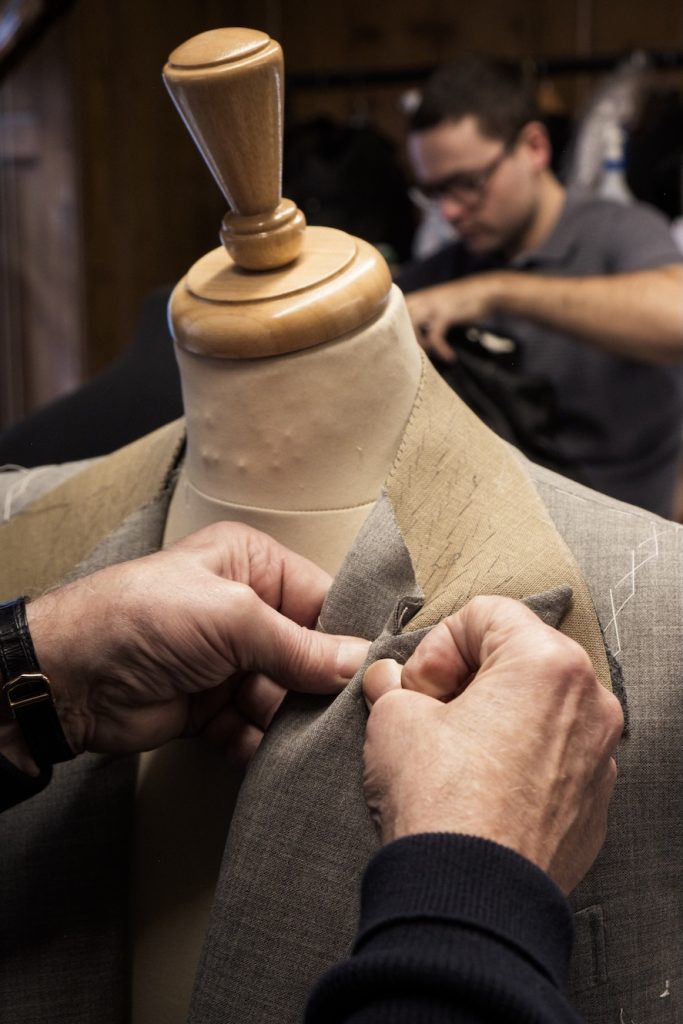
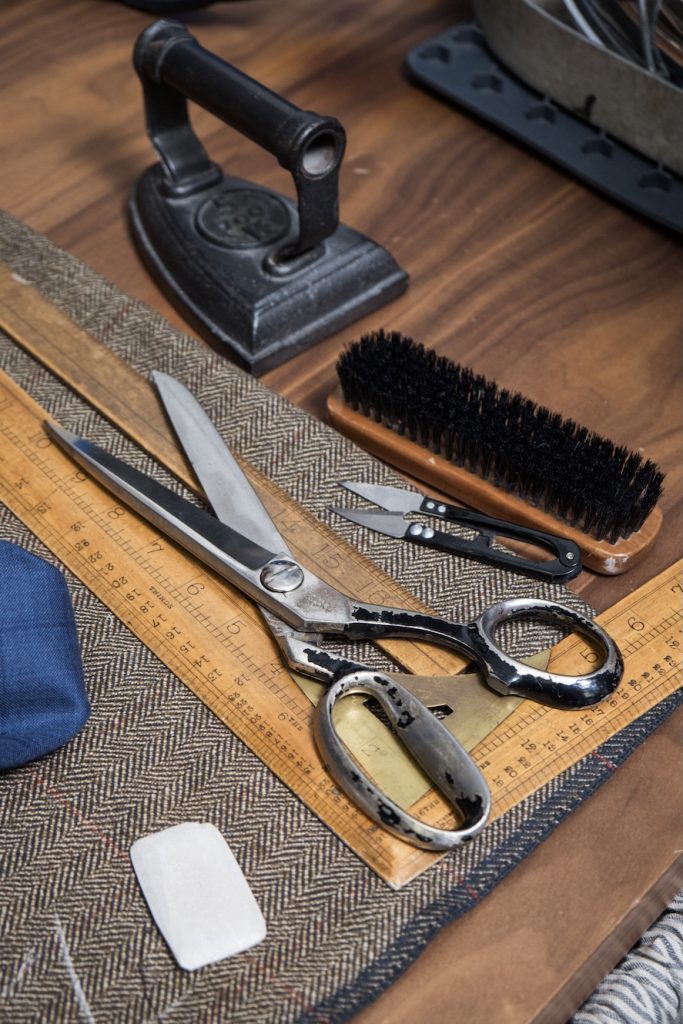
Just a stone’s throw from the soon-to-open Cambridge House, Auberge Collection, the world’s most famous tailoring street—Savile Row—trades on more than 200 years of tradition. Case in point: Henry Poole opened its first shop in 1846 and, since then, the foundation of his craft has remained largely unchanged. Patterns are still drafted on paper, coats are cut by hand, and garments are assembled using techniques that predate electricity. As in generations past, apprentices still rise through a hierarchy of coatmakers, cutters, and finishers. For most houses, “trend” is considered a dirty word.
Lately, however, something quietly radical is happening behind Savile Row’s formidable doors and brass plaques. A new generation of tailors is bending, though not entirely breaking, the rules as they rethink their place in modern fashion—and yet they are still just as committed to maintaining the codified craftsmanship that earned them their prestigious address in the first place. From womenswear pioneers to streetwear stylists, these visionaries are reshaping London’s most famously buttoned-up street, one perfectly placed stitch at a time.
KNATCHBULL
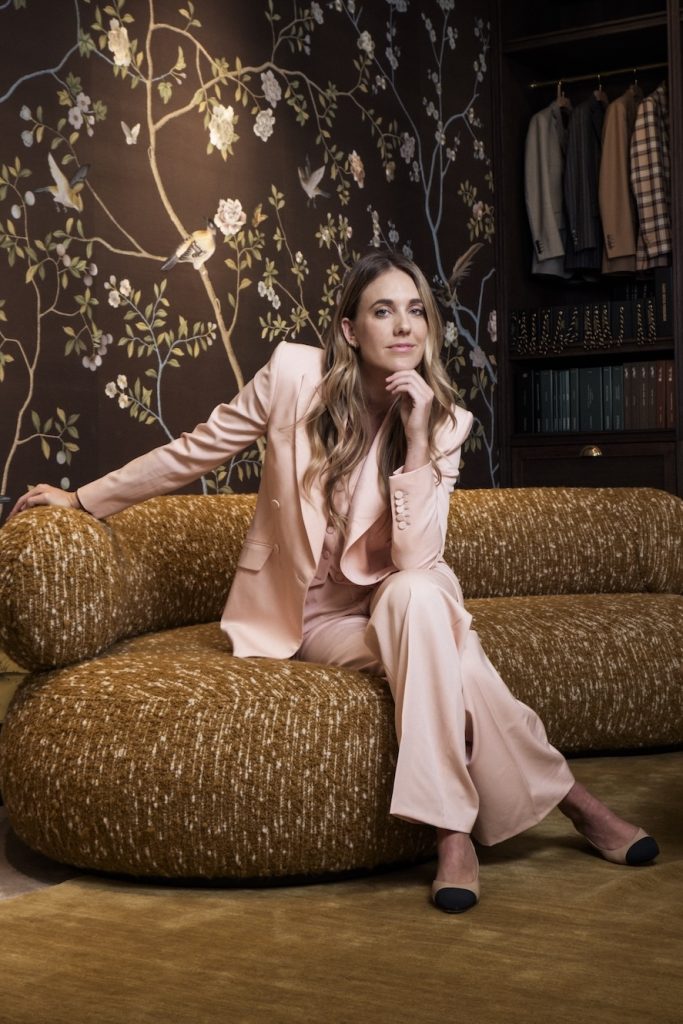
As founder of the first women’s-only tailoring house on Savile Row, Daisy Knatchbull is nothing short of a disruptor. The former communications executive began her career at Huntsman, one of the Row’s most famous houses, where she fell in love with bespoke tailoring—and also spotted a gap in the industry. “For decades, women’s suits were largely adaptations of men’s tailoring, simply scaled down rather than thoughtfully redesigned with the female form in mind,” Knatchbull says.
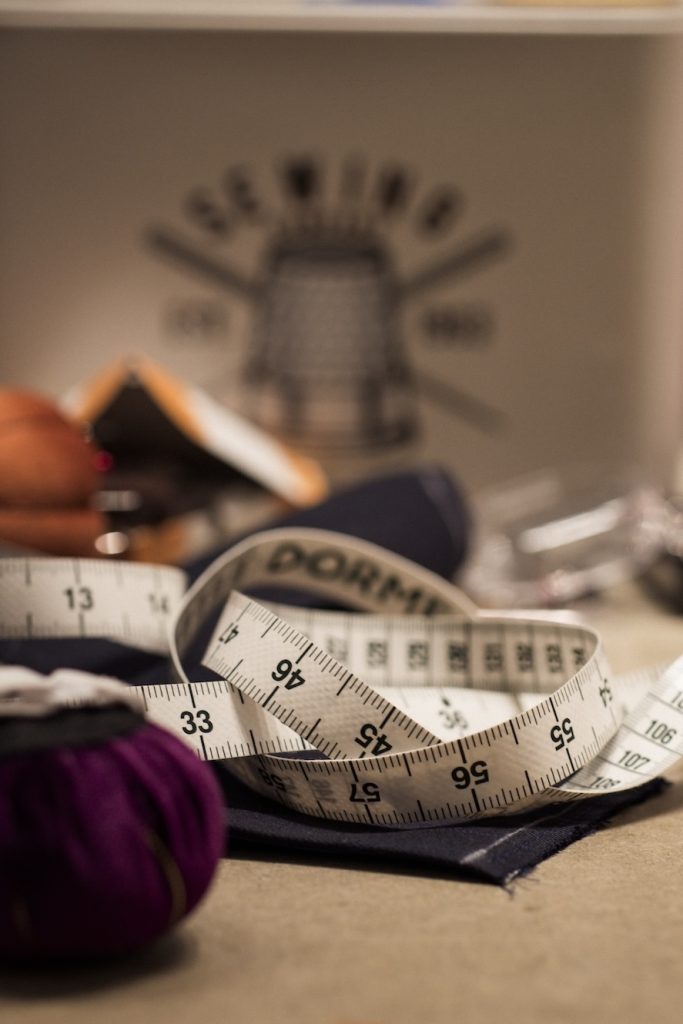
In 2019, she changed that by establishing her namesake atelier combining traditional tailoring craft with modern womenswear design. “At Knatchbull, we start from a completely different perspective,” she says. “We have a team of female tailors who understand the female body and the nuances that come with it.” (Lending further credit are high-profile fans like Gwyneth Paltrow and Gillian Anderson.) Each commission begins with an in-depth consultation, where tailors take precise measurements and discuss the client’s lifestyle, needs, and what they hope to highlight or conceal. Knatchbull subverts classically masculine styles, tailoring garments to accentuate a small waist or sculpting silhouettes to define curves. Smart checked suits are made with dramatic, wide-leg pants, and extra-long, form-fitting tuxedo jackets can even become a dress. The result, according to Knatchbull: “Suits that are powerful and elegant, while truly celebrating modern femininity.”
CASELY-HAYFORD
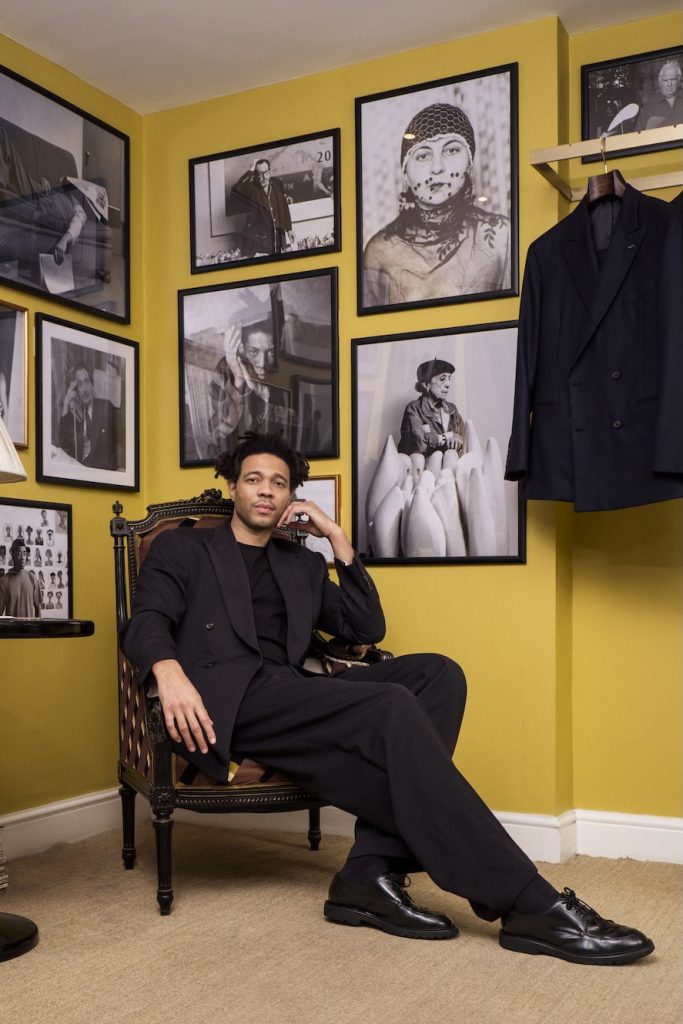
For Charlie Casely-Hayford, suiting is about creative dialogue. “We enjoy building clients’ wardrobes with them rather than thinking about garments in isolation,” he says.
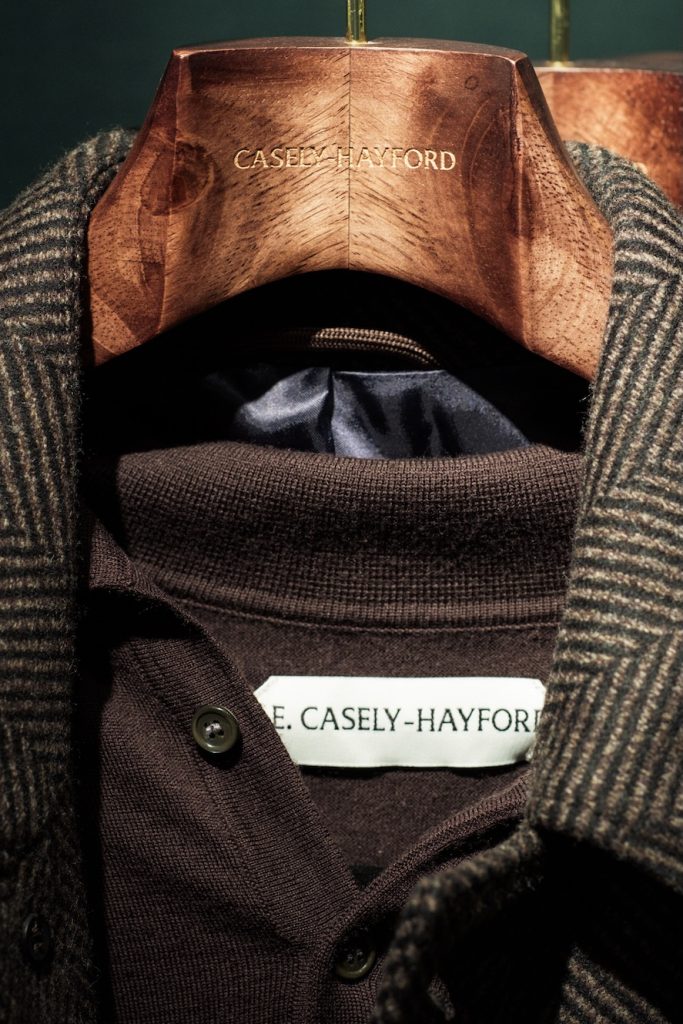
Since taking the reins of Casely-Hayford—the house founded in 1984 by his late father, legendary designer Joe Casely-Hayford—the second-generation tailor has viewed his role as a steward of legacy. To that end, his workshop remains grounded in classical technique, but intent on evolving “the language around traditional tailoring.” Suits are cut generously and fluidly, in materials that ooze sophistication. Signature touches include wool crepe (a material normally reserved for couture womenswear), concealed fly fronts, and louche, double-breasted silhouettes.
As Casely-Hayford puts it, his approach is defined by an idea that his father impressed upon him for many years: “The whisper is louder than the shout.”
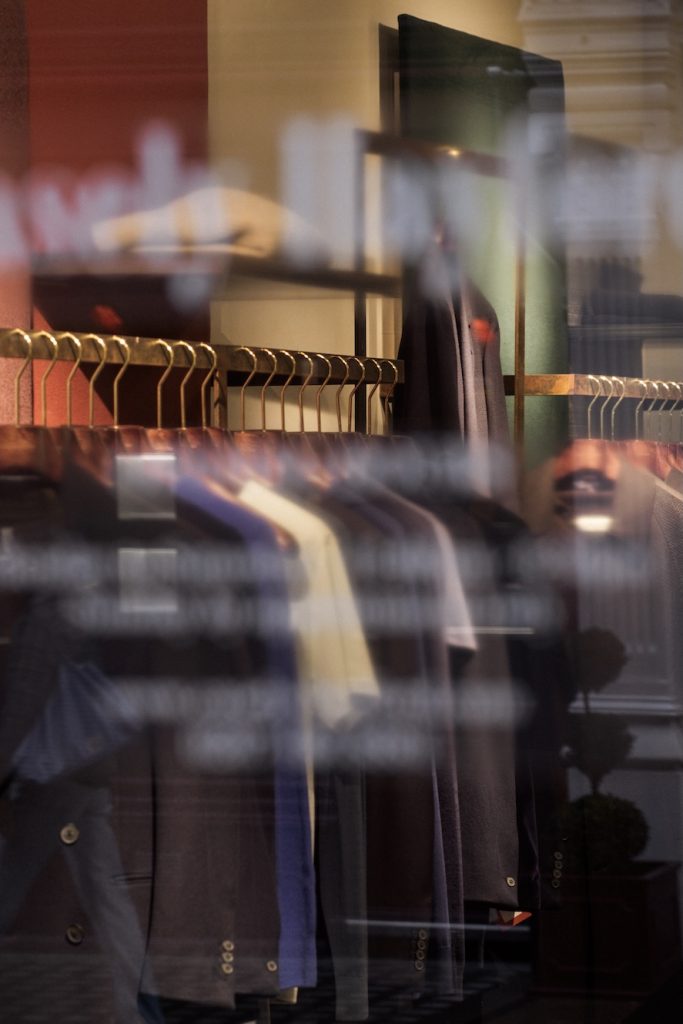
CAROLINE ANDREW
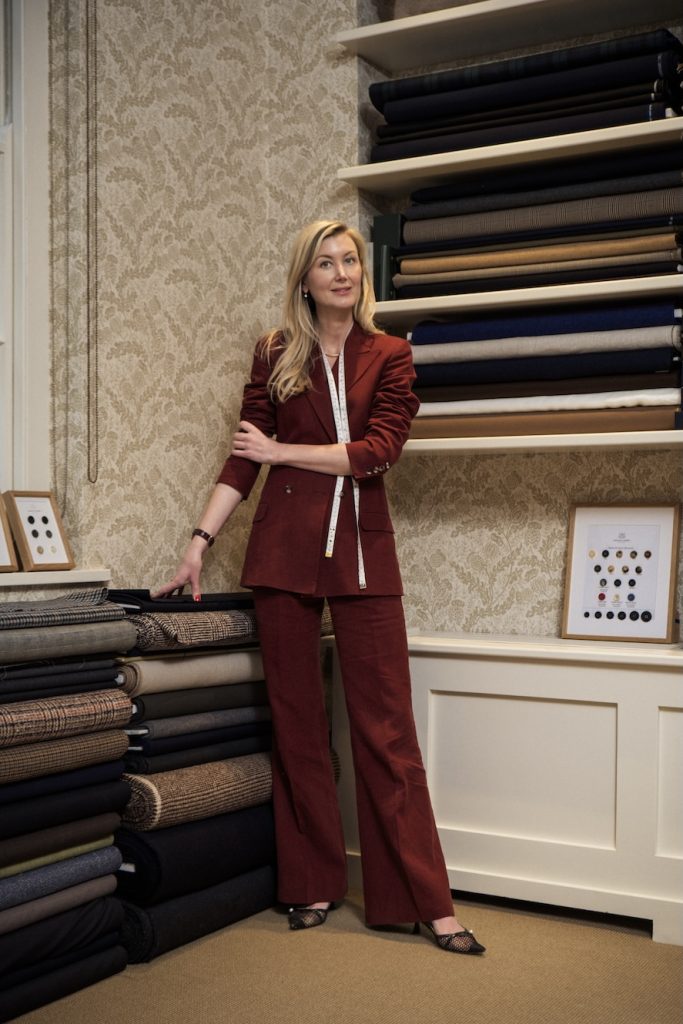
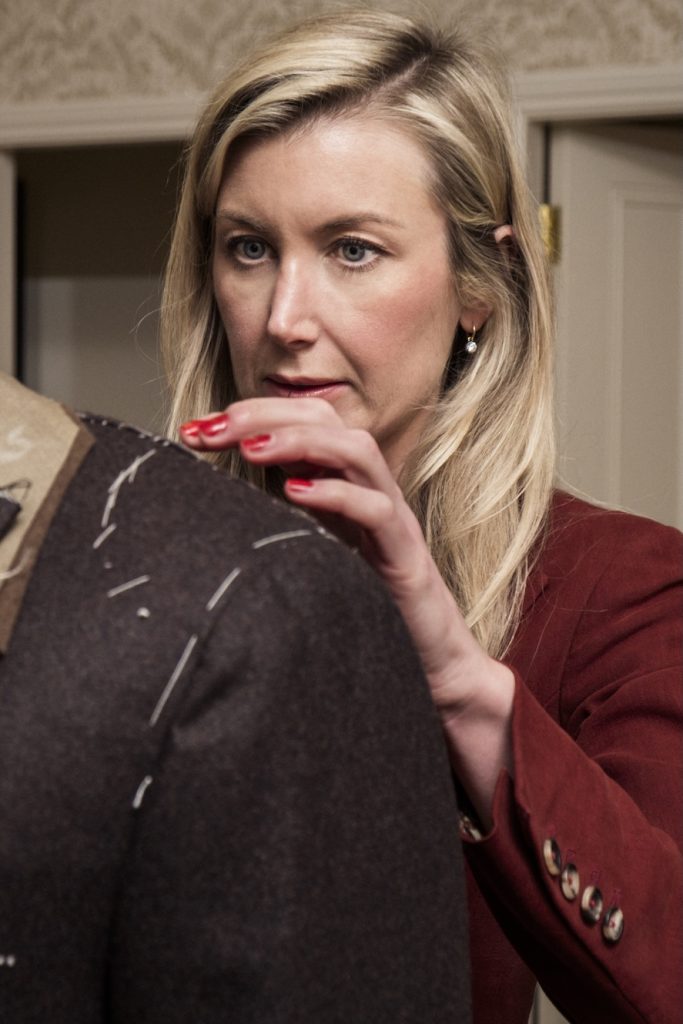
Caroline Andrew’s atelier on Old Burlington Street reads more residential than workshop—and that’s by design. “I really like to spend time with a customer during their first consultation,” says Andrew, who tailors for both masculine and feminine sensibilities. “I want clients to feel really relaxed so they give me their true, authentic selves and the true version of how they’ll be wearing the suit.”
This enables Andrew to craft garments that are truly lifestyle appropriate, with cuts, cloth, and construction made as comfortable and flattering as possible. Understated is the operative word here: A Caroline Andrew suit retains the elegance and understatement that Savile Row suiting is known for, but with a contemporary point of view informed by the fashion world today. “It’s important to pick up on subtle changes in taste—the colors, cuts, and fabrics that work well in 2026,” she says.
That plays out in her classic two-button, notch-lapel suit jackets—made in unexpected materials, like vibrant blue worsted wools—and field jackets cut from dusty pink corduroy. One of her favorite fabrics is traditional Black Watch tartan, with its deep navy and forest green checks, which she uses in everything from neat, double-breasted suits to indulgent smoking jackets. What can be found in every piece, however, is Andrew’s signature balance blending heritage with quiet innovation.
THOM SWEENEY
When Thom Whiddett and Luke Sweeney founded Thom Sweeney in 2007, it was with the goal of making Savile Row feel lighter, softer, and more modern. The duo deliberately positioned their flagship workshop on Old Burlington Street, a stone’s throw from the Row as a nod to their missive of eschewing the establishment—not too much, but just enough.
“We recognized that men didn’t always want their suits to feel like suits of armor,” Whiddett says. “We made our jackets softer, slimmer, and a bit shorter than traditional Savile Row, referencing Italian tailoring without losing our British identity.” This philosophy applies equally to Thom Sweeney’s bespoke tailoring and ready-to-wear collections, which mix luxurious casual wear with curated seasonal edits of modern suits and separates. The goal is to dress clients “from Monday through to Sunday,” Whiddett says.
Appropriately, clients are meant to linger at Thom Sweeney’s flagship, a five-story townhouse with a barbershop, tailoring workrooms, and top-floor club room. The emphasis is less on transactions than on creating an atmosphere where men can feel quietly at home, moving between floors with an espresso in hand or settling upstairs with a newspaper and a cocktail between fittings. The same approach shapes the company’s presence stateside, where outposts in New York, Miami, and Los Angeles have been designed to replicate the unhurried, club-like atmosphere of its London home.

CLOTHSURGEON
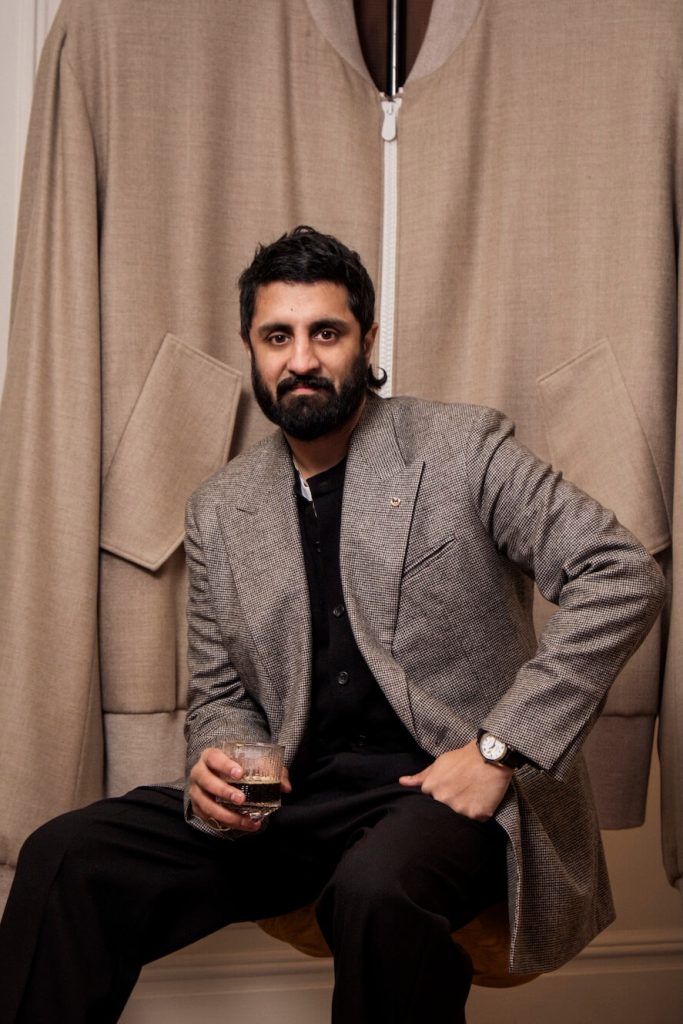
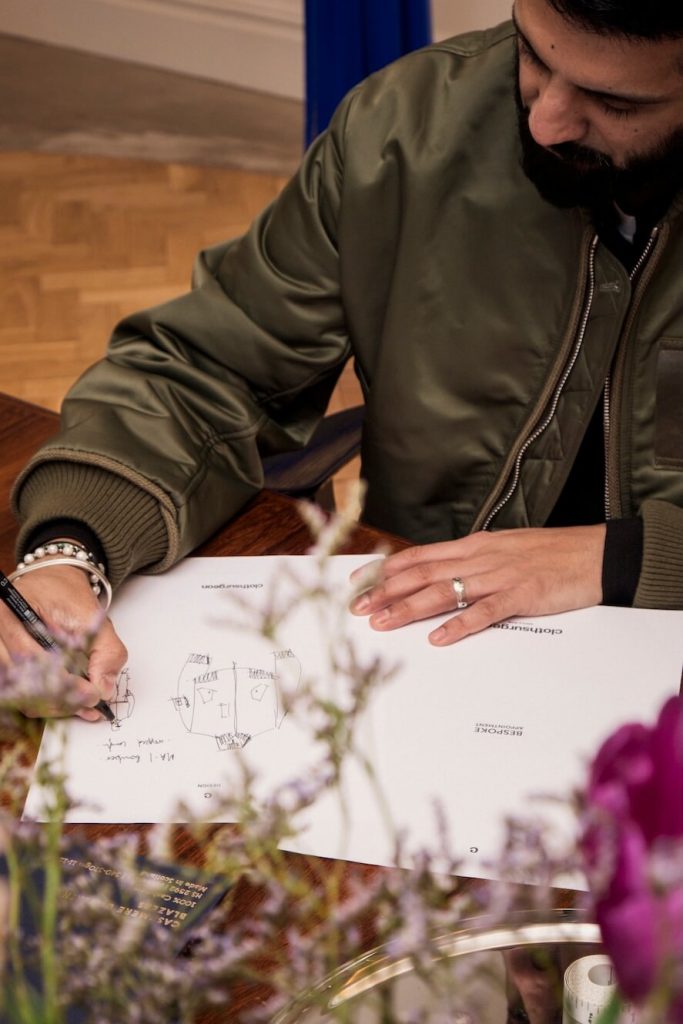
Yes, Rav Matharu will make you a flawless suit, but his brand, Clothsurgeon, founded in 2012, is best known for something less conventional: hand-tailored streetwear. The former soccer player opened his shop on the Row in 2022, offering luxury hoodies, tracksuits, and bomber jackets—casual pieces to be sure, but all constructed with the same rigor as a three-piece suit.
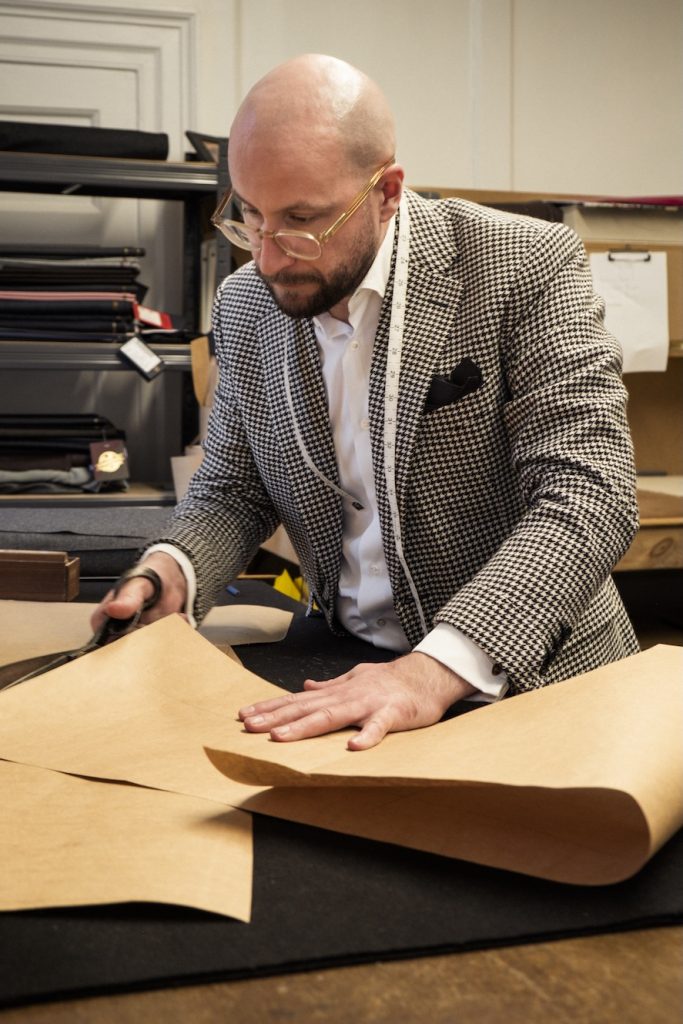
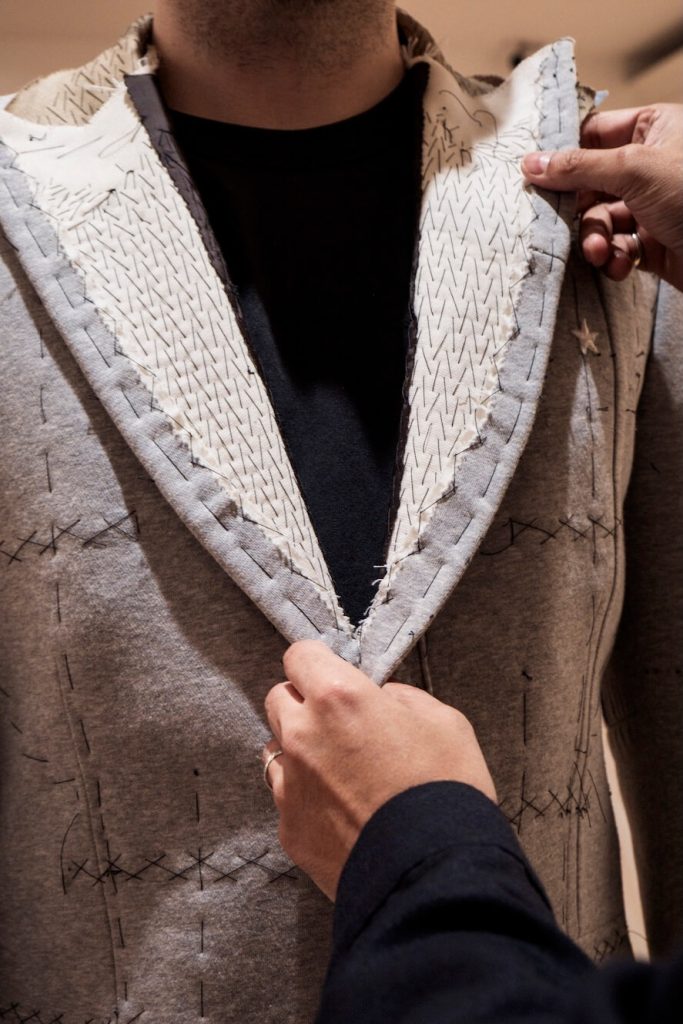
It’s a more free-form approach to the old days of tailoring, Matharu says. “We have a unique offering, allowing the customer to create whatever garment they wish.” Much like any custom suit, the process begins with an initial conversation and a sketch. Drawing from his deep understanding of both the tailoring world and contemporary menswear, he adheres to old-school practices, taking up to 25 measurements and cutting paper patterns (using a scalpel, not traditional tailors’ shears—hence the name) before a garment is handsewn in his London workrooms. Such effort elevates everyday casual wear into new territory: cashmere joggers, a corduroy work jacket, and wool and cashmere flannel jeans all look and feel sharp and personalized.
EDWARD SEXTON
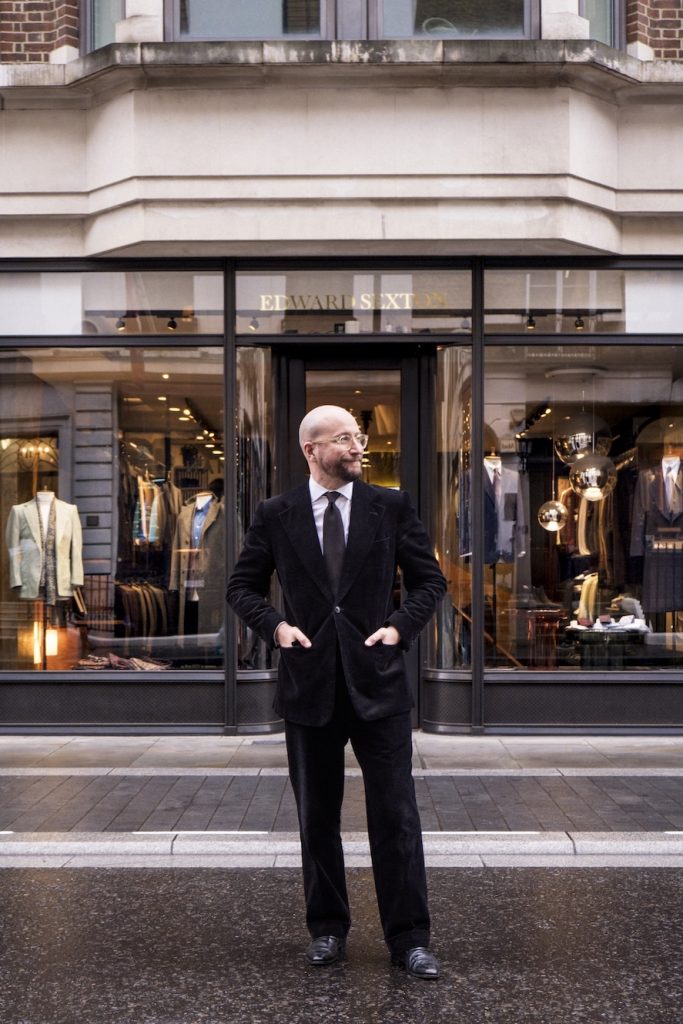
In 1969, Nutters of Savile Row debuted and instantly broke with convention as the go-to tailor for musicians, artists, and creative rebels—all of whom frequented the atelier for huge lapels, exaggerated shoulders, nipped-in waists, and scandalously tight trousers. Co-founder Edward Sexton was one half of the partnership behind the avant-garde newcomer, going on to open his eponymous tailoring studio on the Row in 2022. Though Sexton has since passed, his outside-the-box style carries on thanks to the adept tailoring of head cutter Joseph Butler.
Butler’s focus is on preserving Sexton’s bold, architectural style, while subtly refining the way garments look and feel. In practice, that means retaining the dramatic silhouettes on which the workshop was founded—peak lapels, longer-length jackets, and hourglass waistlines are all still trademarks. But the experimentation doesn’t end there: Aligning with the needs of modern men, Butler emphasizes slightly softer constructions, using less internal canvas and horsehair than traditional tailoring to give suits greater ease and movement—and a fresh wearability that reflects the times.